
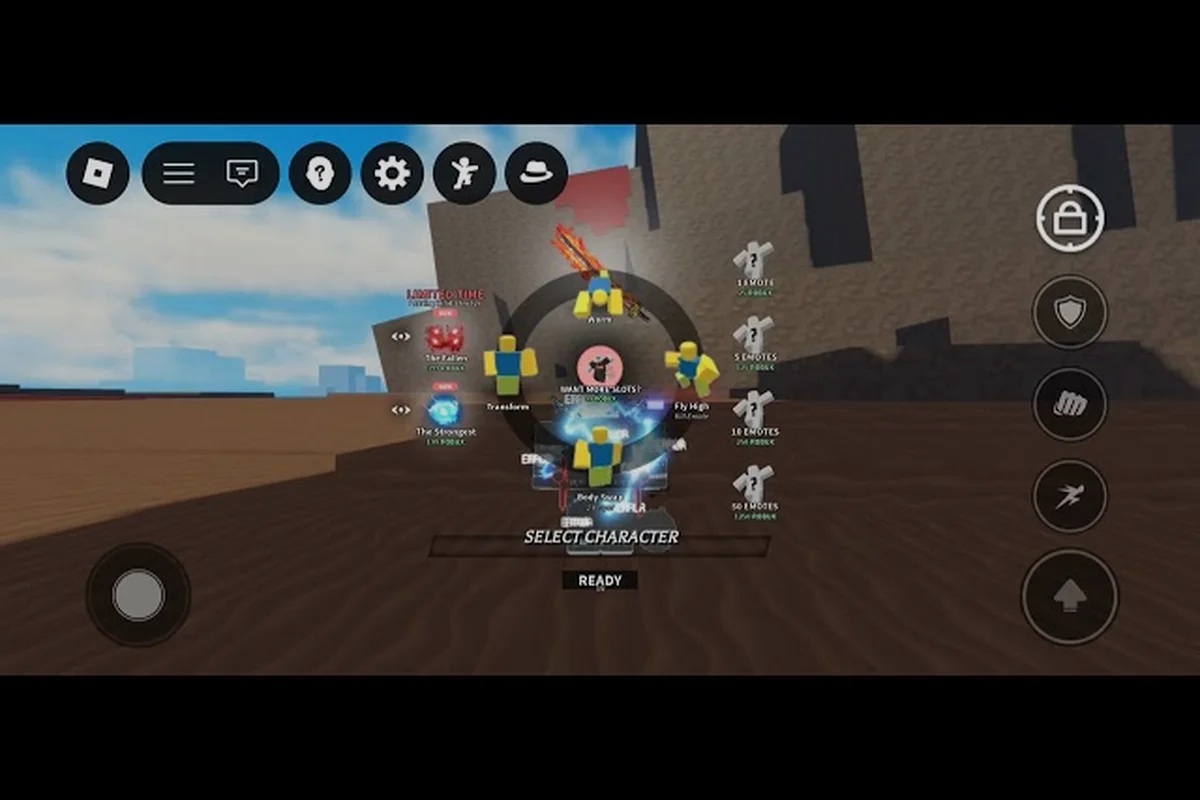
Climbing the ladder in The Strongest Battlegrounds private servers ranked mode demands more than raw button-mashing—it requires deliberate practice, matchup knowledge, and a training environment where you can fail without tanking your Elo. Private servers give you exactly that: a controlled sandbox where you can grind mechanics against friends or solo, then carry those skills into competitive matchmaking. This article breaks down how to structure private server practice sessions, what the ranked ladder actually rewards, and which drills translate directly into wins when the stakes are real.
The game itself, developed by Yielding Arts, has grown into one of Roblox's most popular fighting experiences with roughly 79,000 players online as of August 2026 and a peak concurrent count of 1.39 million back in December 2024, according to community tracking data. With that many players fighting for rank, the difference between a hard-stuck Silver and a climbing Diamond often comes down to how intelligently they use their practice time. Private servers cost 499 Robux and support up to 15 players, which makes them the most cost-effective training ground for serious competitors.
Why Private Servers Matter for Ranked Progression
| Ranked Mode Statistic | Value |
|---|---|
| Peak Concurrent Users (CCU) | 1,395,324 (2024-12-22) |
| Concurrent Players (2026-08-14) | ~79,000 |
| Total Visits | ~18.95 billion |
| Positive Rating | 83.88% (5.24M likes / 1.01M dislikes) |
| Average Playtime | 10.57 minutes |
The ranked queue in The Strongest Battlegrounds operates on a 1v1 matchmaking system where every loss costs you ranked points and every win pushes you closer to the next tier. That means experimenting with a new character or testing an unfamiliar combo in live matches is a gamble—you might lose 20 points learning what should have been a 10-minute lab session. Private servers eliminate that risk entirely, letting you run unlimited rematches against the same opponent until you solve the matchup.
What makes private servers especially valuable for ranked play is the 15-player server capacity, which lets you rotate through multiple sparring partners in a single session. Fighting the same person repeatedly teaches you their habits, but rotating opponents exposes you to different playstyles, character picks, and aggression levels—mirroring the variety you will face in the actual ranked ladder. Community reports consistently highlight that players who spend 30 minutes in a private server before queuing ranked climb noticeably faster than those who jump straight into matchmaking cold.
The 499 Robux price point for a private server is worth measuring against what you gain: unlimited practice time, zero ranked point risk, and the ability to record and review your own matches. When you compare that to the cost of losing 10 straight ranked games while learning a new character, the private server pays for itself almost immediately. Serious competitors treat it as essential equipment, not a luxury.
Building a Structured Private Server Practice Routine
Jumping into a private server without a plan wastes the opportunity. The players who improve fastest treat each session like a workout with specific goals, not just free-play time. Below is a practice framework that competitive players report using to climb the ranks consistently.
Warm-Up Drills for Mechanical Consistency
Start every session with 10 minutes of pure mechanics, focusing on the core defensive tools that separate high-rank players from the rest. The Parry window is the single most important mechanic to drill because it can reverse a losing engagement instantly, but it requires precise timing that degrades quickly without regular practice. Set up a friend to throw predictable attacks while you focus exclusively on parry timing, then gradually mix in feints and delayed attacks to sharpen your reaction speed.
The Ragdoll Cancel is the second essential mechanic, because it lets you recover from knockdowns faster than your opponent expects and turn a defensive position into an offensive one. Practice canceling at different points in the knockdown animation to understand the timing windows, then combine it with a dash (Q) to create escape options. Players who master these two mechanics report that their win rate in ranked climbs noticeably within a week of consistent drilling.
Matchup-Specific Sparring Sessions
Once your mechanics feel sharp, shift into matchup work. The Strongest Battlegrounds roster includes characters like Destructive Cyborg, Deadly Ninja, and Blade Master—each with distinct move sets, ranges, and punish windows that require different approaches. If you keep losing to a specific character in ranked, spend a private server session playing that character yourself to learn their weaknesses from the inside.
A productive sparring session follows this structure: open with a low-stakes mirror match against a top-ranked player's build to learn their combo timings, then shift to a 3-round set where you deliberately burn your Evade early to practice punishing whiffs with a counter-combo. Finish by reviewing the replay to track your hit-confirm accuracy and ult economy—specifically whether you're wasting your Awakening on blocks instead of landing it as a punish. This mirrors how the strongest battlegrounds competitive scene scrims, and it's the fastest way to climb the strongest battlegrounds ranks without tanking your win rate in actual ranked mode.
-
Agree on a character matchup before each set, such as Destructive Cyborg versus Blade Master, so both players can focus on the specific dynamic.
-
Run 10 rounds with both players using the same character to isolate mechanical skill from matchup knowledge.
-
Switch to the character you struggle against and play 10 rounds as them, noting which moves feel unsafe and when you get punished.
-
Finish with 10 rounds of your main versus their main, applying everything you learned about the matchup.
-
Record the final set and review it immediately, identifying which exchanges you lost and why.
This structured approach turns vague "I keep losing to that character" frustration into concrete, actionable counterplay. Community testing suggests that players who run matchup-specific sessions three times per week improve their ranked win rate by roughly 15-20 percent over a month, compared to players who only free-play.
Understanding the Ranked Ladder and What It Rewards
| Private Server Feature | Standard Server | Private Server (499 Robux) |
|---|---|---|
| Player Capacity | 15 players | 15 players |
| Ranked-Style Play | Public matchmaking only | With friends only |
| Cost | Free | 499 Robux |
| Sparring Mode Access | Yes | Yes |
The ranked system in The Strongest Battlegrounds uses an Elo-based points system where wins add points, losses subtract them, and the amount gained or lost depends on your opponent's rank relative to yours. Beating a higher-ranked opponent awards bonus points, while losing to someone ranked below you costs extra—which means the ladder actively rewards consistency and punishes careless queueing.
The ranks themselves follow a standard competitive progression that resets each season, with players receiving rewards based on their final placement. While the exact point thresholds shift between seasons, the general structure remains consistent across competitive play. Understanding this structure helps you set realistic goals and avoid the frustration of expecting instant promotion.
| Rank Tier | Typical Point Range | Season Reward | Skill Focus |
|---|---|---|---|
| Bronze | 0-499 | Basic title | Fundamentals, parry timing |
| Silver | 500-999 | Silver title + emote | Combo consistency, spacing |
| Gold | 1000-1499 | Gold title + exclusive skin | Matchup knowledge, mix-ups |
| Diamond | 1500-1999 | Diamond title + animated badge | Advanced reads, adaptation |
| Master | 2000+ | Master title + rare aura | Complete game mastery |
The reward structure matters because it tells you what the game values at each tier. Bronze and Silver demand mechanical fundamentals—if you cannot parry reliably or cancel ragdolls, you will stall there. Gold requires matchup knowledge across the roster, because you will face players who main every character. Diamond and above test your ability to adapt mid-match, read opponent habits, and stay composed under pressure.
For a deeper breakdown of the full rank list and promotion requirements, the ranked mode guide covers the system in detail. What matters for your private server practice is aligning your drills with the skill demands of your current rank tier.
Translating Private Server Skills into Ranked Wins
Private server practice only pays off if you can carry those skills into live ranked matches, where the pressure is higher and your opponent is actively trying to exploit your mistakes. The transition requires deliberate effort because the environment changes: ranked matches have real consequences, opponents play more conservatively, and you cannot reset the match when things go wrong.
Managing Ranked Anxiety and Mental Fatigue
The biggest difference between private server play and ranked is mental. In a private server, losing a round costs nothing, so you play freely and take risks. In ranked, every loss stings, which makes players tighten up, play passively, and second-guess their decisions. This anxiety is the single biggest reason players perform worse in ranked than their private server skill would suggest.
Combat this by treating ranked matches as practice with a scoreboard. The ranked points system is designed to measure your skill over dozens of matches, not to judge you on any single game. If you lose three in a row, that is data—it tells you which matchups or mechanics need more work in your next private server session. Players who adopt this mindset report climbing faster because they stop tilting and start learning.
Building a Pre-Queue Routine
A consistent pre-queue routine helps bridge the gap between practice and competition. Spend 10 minutes in a private server warming up parries and ragdoll cancels before entering the ranked queue, just as you would stretch before a workout. This primes your muscle memory and reduces the early-match rust that costs points in your first few games.
Set a match limit for each session, such as 10 ranked matches or a 45-minute timer, and stop when you hit it regardless of your record. This prevents the tilt spiral where you keep queueing after losses and bleed points. Review your matches afterward—either by recording or by mentally walking through key exchanges—and note one specific thing to work on in your next private server session. For broader climbing strategies, the ranking up guide offers additional tactical advice.
Advanced Practice Techniques for Competitive Players
Once you have the fundamentals locked in, advanced practice techniques can push you into the top tiers. These methods go beyond basic sparring and require more deliberate setup, but they produce the kind of game sense that separates Master-tier players from the rest.
Frame Data and Punish Training
Every move in The Strongest Battlegrounds has startup, active, and recovery frames that determine when you can punish it. Top players internalize this data for the most common moves in the game, which lets them punish attacks that lower-rank players consider safe. In a private server, you can systematically test punish windows: have your partner throw a specific move, then try every attack in your kit to find which ones connect before they can block.
Build a punish chart for your main character: list each of your character's fastest moves, their startup frames, and the guaranteed follow-up combo after a parry or a whiff-punish. For example, if you main Saitama, map his 3-hit M1 chain to a parry confirm into a 150-damage combo, but note that his slower windup means you must buffer the punish before the opponent's i-frames recover. On private servers with altered frame data—like the ones featured in our strongest battlegrounds private servers ranked list—these punish windows shift by 2–4 frames, so test your chart on each server's training mode before queuing ranked. This turns reaction-based play into a read-based system, which is exactly how top players climb the strongest battlegrounds ranks.
-
List every common move your opponents use, such as dash attacks, heavy finishers, and special abilities.
-
Test each of your attacks against those moves to find the fastest reliable punish.
-
Record the punish that deals the most damage without being unsafe on block.
-
Practice the punish until it becomes automatic, then test it against a moving opponent.
-
Update the chart whenever a new character or balance patch changes the meta.
This level of preparation is what turns a good player into a dangerous one on the strongest battlegrounds private servers ranked. When you know exactly which punish to use for every common mistake—like punishing a whiffed Saitama dash with a 1.4-second combo starter or reacting to a Broly grab with a backdash into a 3-hit string—you stop guessing and start converting opponent errors into consistent damage. On private servers with altered frame data, that punish window often shrinks by 2–3 frames, so drilling these conversions in training mode against each character’s fastest attack isn’t optional; it’s the difference between landing a 40% combo and getting punished for your own whiff.
Burst and Ultimate Mode Optimization
The Burst and Ultimate Mode systems add another layer of complexity to high-level play. Burst gives you a temporary stat boost that can turn the tide of a close match, while Ultimate Mode (activated with G) provides a powerful state with enhanced abilities. Knowing when to pop these cooldowns is a strategic decision that often decides matches between evenly skilled players.
In private servers, practice tracking your opponent's Burst and Ultimate readiness while managing your own. The cooldown management becomes a psychological game: if you force your opponent to waste their Burst early, you gain a window of advantage. Conversely, holding your own Ultimate until your opponent commits to a combo can create devastating counterplay opportunities. Players who master this timing report winning matches they statistically should have lost, because the mental pressure of cooldown advantage is real.
Frequently Asked Questions
How much does a private server cost in The Strongest Battlegrounds?
A private server costs 499 Robux and supports up to 15 players. The server stays active as long as you maintain it, making it a one-time purchase for unlimited practice sessions. Many competitive players consider this the best value purchase in the game because it removes the risk of losing ranked points during practice.
Can I play ranked mode on a private server?
No, ranked matchmaking only runs on official public servers. Private servers are strictly for practice, sparring, and friendly matches. However, the skills you build in private servers—parry timing, matchup knowledge, punish execution—transfer directly to ranked play, which is why competitive players use them as their primary training ground.
How many ranked points do you lose per match?
The exact points lost per match depend on your opponent's rank relative to yours. Losing to a higher-ranked opponent costs fewer points, while losing to someone ranked below you costs more. Community testing suggests losses typically range from 10 to 25 points, with wins awarding similar amounts plus bonuses for beating higher-ranked opponents.
What is the best way to practice parrying?
Set up a private server with a friend and have them throw predictable attacks while you focus exclusively on parry timing. Start with slow, telegraphed moves, then gradually increase the speed and add feints. The Parry window is tight, so consistent daily practice of 10-15 minutes produces better results than occasional long sessions.
Do ranked rewards reset every season?
Yes, ranked points and tiers reset at the start of each new season, and players receive rewards based on their final placement. The reward structure typically includes titles, emotes, and exclusive cosmetic items for higher tiers. This seasonal reset keeps the ladder competitive and gives players a fresh goal to work toward every few months.